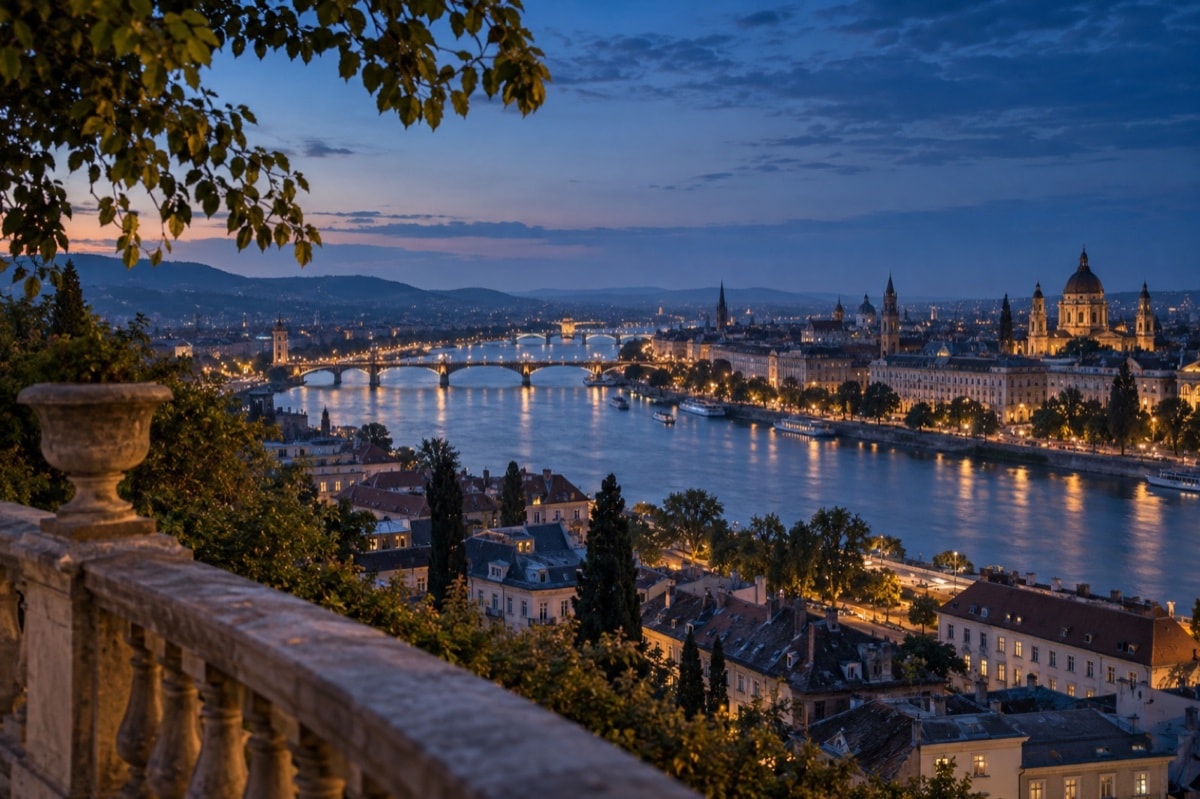
Budapest’s historic spas: Gellért, Király, Rác, Rudas, Széchenyi and Lukács
A substantive guide to Budapest’s thermal springs, Roman and Ottoman bathing culture, landmark baths and practical etiquette. The purpose is to understand the place through enduring geography, architecture and culture, concentrating on stable context and connections that support thoughtful orientation.
A city shaped by hot water
Budapest is commonly introduced through a striking count of about 80 geothermal springs. Whatever number frames the story, the essential fact is visible in the city itself: hot water, fault lines and the Danube have supported a remarkably dense bathing culture.
Budapest’s historic spas: Gellért, Király, Rác, Rudas, Széchenyi and Lukács — A city shaped by hot water. This is more useful than a checklist because it gives the place a readable structure. Materials, scale and the relationship with the surrounding landscape reveal how a monument or district belongs to a wider Hungarian story.
Budapest’s historic spas: Gellért, Király, Rác, Rudas, Széchenyi and Lukács. Moving between the broad view and close detail clarifies the subject. Once the overall structure is visible, materials and small transitions can be revisited with better questions, turning a sequence of stops into interpretation. Seen in this way, the subject becomes part of a connected city or regional narrative rather than a detached stop.
Roman foundations and Ottoman rooms
Aquincum had an established Roman bathing tradition. Ottoman Buda later developed domed rooms organised around central pools; Király, Rudas and the historic core of Rác preserve the architectural language of that era.
Budapest’s historic spas: Gellért, Király, Rác, Rudas, Széchenyi and Lukács — Roman foundations and Ottoman rooms. A thoughtful visit works through comparison: hill and plain, water and street, ceremonial architecture and ordinary neighbourhoods. Those contrasts make local identity tangible without turning the journey into a ranking of attractions.
Budapest’s historic spas: Gellért, Király, Rác, Rudas, Széchenyi and Lukács. Change over time belongs to the story. Repair, reuse and altered landscapes do not simply erase the past; they reveal how communities have chosen to preserve or reinterpret it. Seen in this way, the subject becomes part of a connected city or regional narrative rather than a detached stop.
Gellért and Art Nouveau
Gellért is known for coloured tile, crafted ornament, glass and carefully staged light. Its interiors show how early modern Budapest turned bathing into a complete architectural experience.
Budapest’s historic spas: Gellért, Király, Rác, Rudas, Széchenyi and Lukács — Gellért and Art Nouveau. The aim is not to collect stops but to connect them. A slow walk, a view back across the river or a pause in a public square often explains the geography more clearly than an isolated landmark description.
Budapest’s historic spas: Gellért, Király, Rác, Rudas, Széchenyi and Lukács. The relationship between public space and everyday use is decisive. A building or landscape gains meaning when one notices who crosses it, which routes it encourages and where it creates room to pause. Seen in this way, the subject becomes part of a connected city or regional narrative rather than a detached stop.
Széchenyi and the neo-baroque city
The Széchenyi complex at Városliget uses sweeping façades and open-air pools to give bathing a civic scale. Water, park and architecture form one composition.
Budapest’s historic spas: Gellért, Király, Rác, Rudas, Széchenyi and Lukács — Széchenyi and the neo-baroque city. Practical arrangements can change, so this page concentrates on enduring history, architecture and cultural context. On-site notices and responsible authorities remain the appropriate source for conditions that vary.
Budapest’s historic spas: Gellért, Király, Rác, Rudas, Széchenyi and Lukács. Photography and memory always select a viewpoint. Changing side, height or distance helps prevent the best-known image from standing in for the complete identity of a place. Seen in this way, the subject becomes part of a connected city or regional narrative rather than a detached stop.
Lukács and a quieter tradition
Lukács is woven into the Buda side’s long relationship with thermal water. Its courtyards and varied spaces feel less ceremonial, revealing the bath as a place of routine as well as heritage.
Budapest’s historic spas: Gellért, Király, Rác, Rudas, Széchenyi and Lukács — Lukács and a quieter tradition. Hungarian names carry essential accents. Keeping forms such as Széchenyi, Gellért, Hévíz and Siófok intact is both accurate and respectful, and it prevents distinct places from dissolving into approximate spellings.
Budapest’s historic spas: Gellért, Király, Rác, Rudas, Széchenyi and Lukács. Regional continuity often appears in materials and repeated gestures. Stone, plaster, timber, water and planting form a vocabulary that returns with variations across apparently separate locations. Seen in this way, the subject becomes part of a connected city or regional narrative rather than a detached stop.
Király, Rudas and Rác
Király demonstrates how an Ottoman bath could receive water away from a spring, while Rudas centres on its octagonal domed hall. Rác belongs to the same deep history and later gained important nineteenth-century architectural layers.
Budapest’s historic spas: Gellért, Király, Rác, Rudas, Széchenyi and Lukács — Király, Rudas and Rác. A map gives only the first layer. Light, orientation and historic routes show how the place relates to nearby centres and to the broader landscape around it.
Budapest’s historic spas: Gellért, Király, Rác, Rudas, Széchenyi and Lukács. A useful guide leaves some questions open. It suggests observable links among geography, history and visible form, allowing readers to develop a route rather than inherit a single compulsory interpretation. Seen in this way, the subject becomes part of a connected city or regional narrative rather than a detached stop.
Etiquette and the pace of bathing
Bath customs differ between complexes and even between pools. Shower first, follow posted signs, bring suitable footwear, speak quietly where the atmosphere asks for it, and never assume that every space follows the same pattern.
Budapest’s historic spas: Gellért, Király, Rác, Rudas, Széchenyi and Lukács — Etiquette and the pace of bathing. Ordinary architecture deserves the same attention as monuments. Courtyards, paving, garden walls and cultivated edges reveal materials and habits that give a district or region continuity.
Budapest’s historic spas: Gellért, Király, Rác, Rudas, Széchenyi and Lukács. Thresholds can be especially informative. A bridge, gate, embankment or woodland edge marks a change of environment and function; crossing it attentively makes the construction of territory perceptible. Seen in this way, the subject becomes part of a connected city or regional narrative rather than a detached stop.
Hot, cool, rest
Hungarian bathing culture is often experienced as a rhythm rather than a single long soak. Moving calmly between water and rest gives time to notice architecture, sound and social custom; there is no value in treating heat as an endurance test.
Budapest’s historic spas: Gellért, Király, Rác, Rudas, Széchenyi and Lukács — Hot, cool, rest. The length of a pause changes what becomes visible. Staying long enough to notice sound, routine and transitions allows the place to appear as lived space rather than a backdrop.
Budapest’s historic spas: Gellért, Király, Rác, Rudas, Széchenyi and Lukács. Local words are not decoration. Specific names and terms preserve cultural distinctions, describe practices and reveal how residents organise space in language as well as on the ground. Seen in this way, the subject becomes part of a connected city or regional narrative rather than a detached stop.
Cultural context without health promises
The Hungarian word gyógyfürdő belongs to an established cultural and administrative vocabulary, and balneotherapy has a long history. This guide describes that tradition but makes no claim that a bath cures or treats any condition.
Budapest’s historic spas: Gellért, Király, Rác, Rudas, Széchenyi and Lukács — Cultural context without health promises. Comparing the related guides widens the meaning of this subject. A feature that seems exceptional here may belong to a regional tradition, while a modest detail can prove distinctly local.
Budapest’s historic spas: Gellért, Király, Rác, Rudas, Széchenyi and Lukács. Comparison with a nearby place prevents quick conclusions. Similarities and differences show what belongs to a shared regional tradition and what is distinctive to a single stop. Seen in this way, the subject becomes part of a connected city or regional narrative rather than a detached stop.
Continue exploring
Budapest’s historic spas: Gellért, Király, Rác, Rudas, Széchenyi and Lukács. Use this page as a starting point for connections rather than a race through names. The related guides link landscape, history and urban character into a coherent route. This is an editorial guide: it provides context and orientation, while details that may change belong with the responsible local sources.